
 1 hour ago
2
1 hour ago
2
John Deaton, the U.S. crypto lawyer who represented XRP holders in the SEC vs. Ripple case, blasted at how U.S. crypto policy is being shaped.
An XRP Voice Warns Against Inaction
Reacting to Ripple’s CEO Brad Garlinghouse’s interview with Maria Bartiromo, Deaton wrote a lengthy post on the social media X today, expressing his worries and concerns regarding the direction crypto policy in the U.S. is taking.
One thing @bgarlinghouse said to @MariaBartiromo that I completely agree with – is that American companies and our financial markets cannot afford to experience Gensler 2.0. And the only way to guarantee that we don’t – is by passing legislation.
Look, no one despises the… https://t.co/H958StIpRY pic.twitter.com/tOdj4N5wlJ
— John E Deaton (@JohnEDeaton1) March 30, 2026
In his interview with Bartirmoro for Fox Business, Garlinghouse warned that if the U.S. keeps dragging its feet, American companies and capital markets will bleed out to friendlier jurisdictions while Washington fixates on the wrong crypto battles.
Bartimoro positioned the discussion around U.S. competitiveness and regulatory chaos, echoing a long‑running Fox Business narrative that America is “losing the race” on digital assets.
Ripple CEO warns against weaponization of crypto policy: ‘We can’t have another Gary Gensler moment’ | https://t.co/hc5WMt0boT @MorningsMaria @FoxBusiness
— Maria Bartiromo (@MariaBartiromo) March 27, 2026
Ripple and XRP holders have lived through that chaos first‑hand, from the SEC fight to today’s policy vacuum.
This is why Deaton seizes on Garlinghouse’s warning. In the middle of a heated fight over Trump’s CBDC ban order and years of media‑driven CBDC panic, Deaton argues that the only way to stop a future surveillance‑style CBDC is through hard legislation passed by Congress.
American companies and our financial markets cannot afford to experience Gensler 2.0. And the only way to guarantee that we don’t – is by passing legislation.
For Deaton, a “Gensler 2.0” means a future regulator who uses aggressive “regulation by enforcement” instead of clear rulemaking, like Gensler did with Ripple, XRP, LBRY, Coinbase and others, and treats most tokens as securities by default, keeping the industry in a constant defensive posture.
What The Future Could HoldThe only durable way to block a U.S. surveillance CBDC is an explicit act of Congress that ties the Fed’s hands, Deaton argues.
But as much progress, guidance, and clarity, @PaulSAtkiinsSEC and @MichaelSelig have provided to the markets, without legislation passed into law – all that guidnace [sic] and clarity can be taken away – as if it never happened – when a new administration takes over.
The XRP advocate finishes his post with a reminder of who is to become Chair of the Senate Banking Comittee which oversees the SEC: Elizabeth Warren. Warren built her brand as a tough Wall Street and big‑bank watchdog. In crypto, she is famous for claiming she is “building an anti‑crypto army”, backing tough bills like the Digital Asset Anti‑Money Laundering Act and pushing amendments that critics say favor banks and restrict digital assets.
We need strong crypto regulation – not an industry giveaway that puts our economy at risk and supercharges President Trump’s corruption. pic.twitter.com/6sVbwMiSFf
— Elizabeth Warren (@SenWarren) August 10, 2025
Both Deaton and Garlinghouse warn that regulatory drift is already driving talent, liquidity and innovation offshore, and that the U.S. risks watching the next generation of financial plumbing get built in Europe, Asia or the Middle East instead.
Clarity on XRP’s status and broader digital‑asset law in the U.S. is already shifting flows into assets seen as “safer” from enforcement risk. Further statutory wins could reinforce that capital rotation.
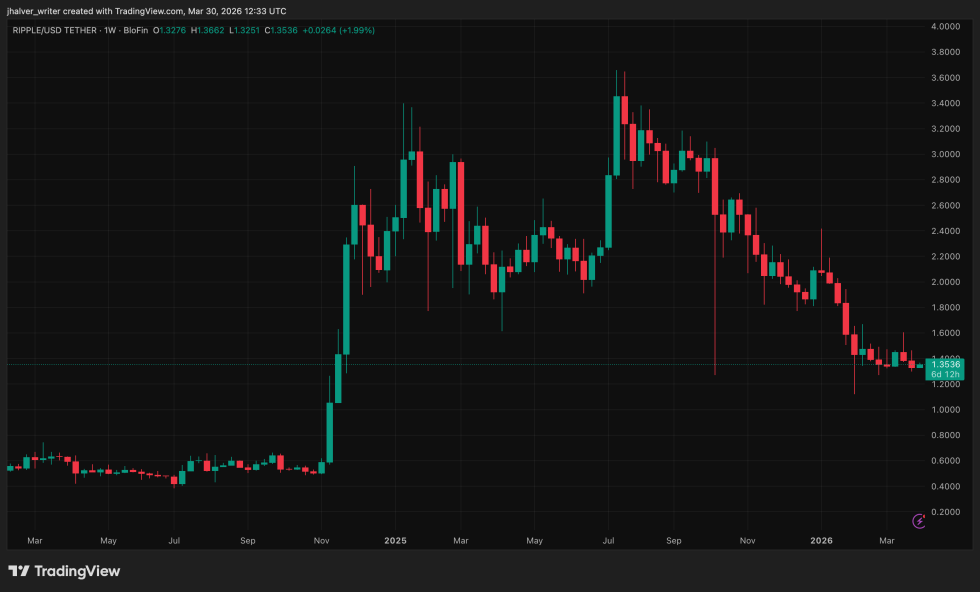
Cover image from Perplexity, XRPUSDT chart from Tradingview











 English (US) ·